Some thoughts on programming stuff

Category: General (Page 3 of 7)

How to use virtual background in Teams

This blog post will show you how to find the buttons and how to use virtual background in Teams. The virtual background in Teams is a new feature recently added by Microsoft. I don’t know if it’s related to the concurrents being able to that like Zoom, but that’s a thing we can discuss later.

Opening the virtual background options

During a call or a meeting, locate the Teams Control Task Bar and click on the Three dots button:

Teams Control Task Bar - How to use virtual background in Teams
Teams Control Task Bar

A menu will popup! Here you must click on Show background effects to open the options available:
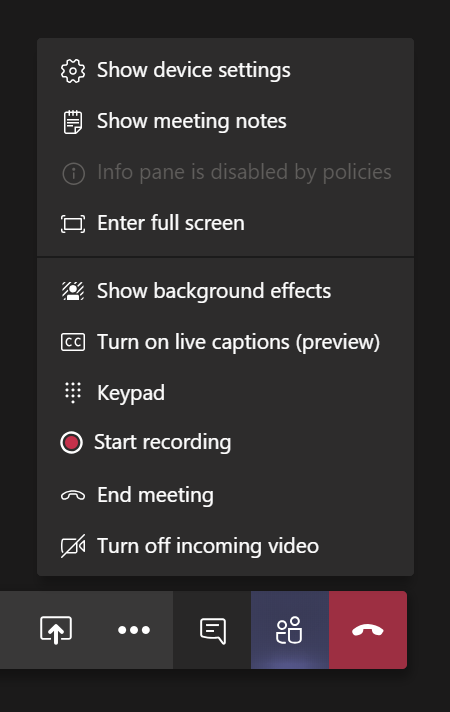
Finding the Show background effects - How to use virtual background in Teams
Finding the Show background effects

Virtual background options in Teams

The background settings available are:

  • No backgroud: just like you are used to;
  • Blur background: it will blur the background, letting it focus only on you;
  • Microsoft images: shows images from the interent to be used by you during your meetings;
  • Custom images: the images will show up in the end of the list based on what JPEG images you’ve put in ” %AppData%\Microsoft\Teams\Backgrounds\Uploads ” folder.

Once you select one of the options, you can hit the Preview button to see how it will look like. Once you are good to go, just click in Apply and the video effect will take place and everyone will enjoy it!
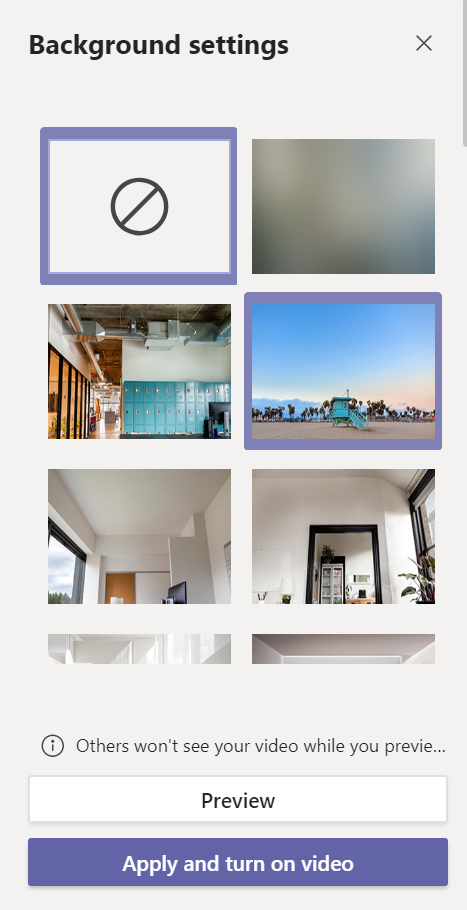
Background settings - How to use virtual background in Teams
Background settings

Setting blur background for Teams

If you are not feeling so creative or your real background is just a mess because you didn’t do your bed, just go for the Blur option:
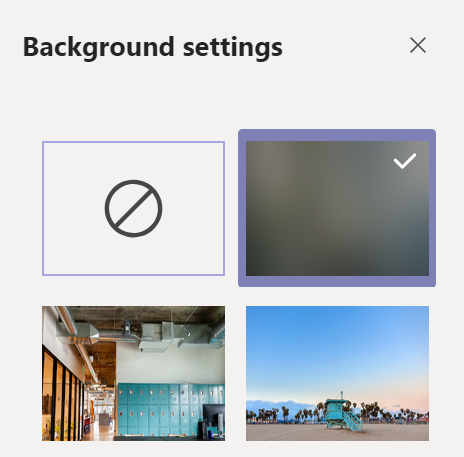
Blur effect - How to use virtual background in Teams
Blur effect

Setting custom backgrounds for Teams

But if you have some nice background and wanna share with your colleagues just to make the meeting more fun or share a part of your personality, then stick with the custom backgrounds!

First you need to save a good JPEG image file inside a specific folder used by Teams:

Teams folder: %AppData%\Microsoft\Teams\Backgrounds\Uploads

Custom backgrounds folder - How to use virtual background in Teams
Custom backgrounds folder

After that, just reopen the Background effects windows and it will show up just like the image below:
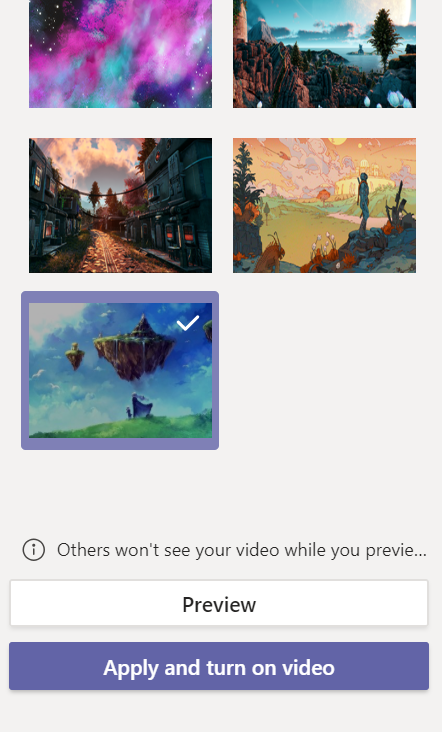
Custom backgrounds in the end - How to use virtual background in Teams
Custom backgrounds in the end

That’s it! I hope you learned how to use virtual background in Teams.

References:
Republic world
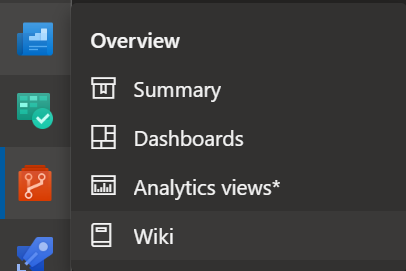
Overview menu in Azure DevOps

This blog post covers the features available in Overview menu in Azure DevOps. The Overview menu summarizes your project and gives you some shortcuts to your dashboards, Wiki documentation and the project description.

If you are looking for a different post related to Azure DevOps menu, as you know, we have this series of posts related to Azure DevOps features where we deep dive into some of them. Maybe you will find them useful to learn more.

Here we have available the possible pages related to Azure DevOps menu you may be interested in checking:

Overview menu options - Overview menu in Azure DevOps
Overview menu options
Continue reading

Export user permissions in SharePoint

This post will present a Powershell script that will let you Export user permissions in SharePoint from all Web Applications and their Site Collections.

The script creates a CSV file and fills the data in the columns like below:

  • Site Name;
  • Site Url;
  • Name of the Group;
  • Login of the Group Owner;
  • Display name of the Group Owner;
  • User Login (who has the permission);
  • User Display Name (who has the permission);
  • The role or permission the user has.
Report after being exported (in Brazilian Portuguese) - Export user permissions in SharePoint
Report after being exported (in Brazilian Portuguese)
Continue reading

Azure DevOps Dark Theme

If you are like me and want to use Azure DevOps Dark Theme, say no more! Basically you can do that in your tenant or deployment (if you go On Premises) in a very easy way. Following this post you will learn how to enable Azure DevOps dark theme.

Hopefully Azure DevOps offers a set of customizable options, so you can adopt easily and use the platform like you want. I’ll cover other options someday.

The Dark theme will have a dedicated post because more and more users use this configuration in any tool they use for many reasons:

  • Less luminosity;
  • Battery consumption reduced;
  • Improved visual ergonomics;
  • Facilitated use in dark environments.

It’s important to say that I’m not an expert on health benefits of dark theme use neither on how it can help your vision against light. There are many studies about it and you can check it over your searches over Internet.

Continue reading

SharePoint breadcrumb for better navigation

This blog post will talk about an idea of customization of the SharePoint breadcrumb for better navigation. The solution uses the out-of-box Delta Breadcrumb Dropdown component to provide the data required to render the breadcrumb using pure JavaScript for that.

Important notes:

  • This solutions works only for Classic Experiences;
  • I would recommend enabling only to internal pages branded using the System Master Page;
  • The JavaScript needs to be installed using a Custom Action or calling the JS file from the Master Page;
  • This solution may not be a good practice for SharePoint Online environments, if you are focused on working only with Modern experiences.
Continue reading

Change List Template language to reuse it in another Site with different language

When importing a list template from another Site or Site Collection built in a different language, you may not be able to see it as an App available to add to your site. It happens because SharePoint will look for the List Templates available in the current language for the Web Site. I’ve experienced it recently when migrating a list from a site collection in Portuguese to another site collection in Spanish, that’s why I decided to write this blog post that teaches how to change List Template language to reuse it in another Site with different language

In this post we will give you a PowerShell that may help you on migrating the list easily.

Continue reading

Get thumbnail URL programmatically in SharePoint

SharePoint Picture Libraries offer an out-of-box feature for image compression and optimization, specially when working with thumbnails. After uploading an image to a Picture Library, you will be able to get an optimized version and thumb version just calling the same image using an specific URL pattern. In this blog post we cover a simple JavaScript function that lets you get picture thumbnail URL programmatically in SharePoint.

First, it’s important to say what is a thumbnail! According to Wikipedia, “Thumbnails are reduced-size versions of pictures or videos, used to help in recognizing and organizing them, serving the same role for images as a normal text index does for words”.

It’s extremely useful when you need to develop a custom web part to present an image inside a Library and you want to save bandwidth for your users at the same time that your site has better performance too. Working with the thumbnail version of your images will let SharePoint handle cache and performance in a more efficient way, making your system more reliable and faster.

Image result for thumbnail image example
Example of thumbnail usage (Open Berkeley)

So how to get the picture thumbnail URL programmatically in SharePoint?

Generating the thumbnail URL

Explanation of thumbnail URL feature in SharePoint

Basically it works transforming a given string in another one that respects the pattern required to generate the URL. You just need to pass an image URL that is stored inside a Picture Library. It will transform an URL like the example below and you can get thumbnail URL programmatically in SharePoint:

In addition to that, if you are working with images you may end up facing some problems with Image Renditions. Maybe this post is for you!

References:
StackOverflow

Notifications for multiple emails in Microsoft Forms

Microsoft Forms is a powerful tool for those who want to create surveys and quizzes, so you can collect data from other people. But if you want to select multiple emails but if you want to send notifications for multiple emails in Microsoft Forms, the task is not that simple since the Forms author will receive them alone.

That’s why I’ve created this post to help you! Empowered by Microsoft Power Automate functionalities, you can easily route those notifications without problems.

Continue reading

Storage Metrics in SharePoint

If you are managing a SharePoint site and need to find out how much space is it using, this post will help on finding the Storage Metrics in SharePoint. You can access this information easily, but it’s required to have SharePoint Site Collection admin rights.

The SharePoint Site Collection admin rights is able to do a lot of things, he is a real Super User and is more powerful than the Full Control permission level. You can access things like the Storage Quota and manage Site Collection Features that are more advanced and complex.

The task this post teaches how to do is very common administrative task for people who support SharePoint solutions and need to control if a subsite or library is getting bigger and if it needs to a new architecture to allocate and distribute the resources in a better way.

Continue reading
« Older posts Newer posts »

© 2026 wiliammbr's blog

Theme by Anders NorenUp ↑